Lost In Concert: Volume One

Lost In Concert is an online publication that focuses on covering touring live acts that make their way into the greater Chicagoland area. What started out as a hub for a group of friends, both photographers and writers, to cover concerts and festivals they could share with people who missed the show birthed a passion for live music. It soon turned into an addiction to try to catch as many live acts as possible–photographing and writing about the experience for other friends and music lovers so they can experience the same feelings that they get when witnessing the passion and dedication of these traveling artists live.

lost-in-concert-volume-one

Once the online library of show coverage had grown into the hundreds it was clear that we had to create something more permanent and tactile to commemorate the project and the music scene at large. This book was the obvious choice. We wanted to make something that fans of music everywhere could leave on their coffee tables to show off their love of live music. A book that they or their friends could flip through for minutes or even hours. A piece of art that really represents how we feel when we experience live music and gets people excited. A collection of memories and moments that help us remember some of the best times of our lives.

We began by looking back through all of our formative coverage and selecting our favorites. With an idea of how many shows we wanted to include we were able to better gauge the size the book would need to be and began to contact designers. Jen Soik, a close friend and fellow music lover had the excitement, talent and most importantly, the follow through needed for a project of this scale.

The final product is Lost In Concert: Volume One — a 154-page, 10-inch by 8-inch, perfect bound, softcover book. The cover printed matte black and overlayed with a spot UV varnish texture and hand-applied custom satin fabric tour pass sticker on the front.

We encourage you to take a look at the Kickstarter page we set up to raise the funding needed to get the book produced. There are different giving levels with different incentives fit for just about everyone.

lostinconcert.com / Kickstarter

Photo Profile: Chris Milne

Photography has always provided the excitement of ‘catching the moment’ for me as I mainly undertake action photography of aviation, music and sports. A lot of the time this is because when something happens in real time you don’t get the chance to appreciate it before you’ve forgotten most of the details.

photo-profile-chris-milne-02

© Chris Milne

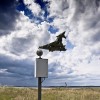
I started out just taking your standard ‘happy snaps’ if you like with my Dad at my local airbase. Soon, I became amazed by the work of others and decided to purchase a DSLR and try to make my own mark. I started out mainly shooting aviation due to an interest in the subject and because there was an airbase so close, I enjoyed the atmosphere and action captured as the time of the day changes and so does the lighting.

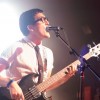
I decided this was not enough and expanded onto sports as well and started shooting at football and rugby matches locally. This was before expanding further into the realm of music most recently where the lighting can make or break the atmosphere and it’s all about catching the emotion, passion and excitement of the moment.

I always found photography a means of pushing the envelope and discovery as you can take an ordinary photo and create something extremely eye catching with as little as a few minutes in post processing.

photo-profile-chris-milne-01

© Chris Milne

I’m soon away to study interactive media design at Edinburgh Napier university and I’m looking forward to hopefully a career in digital media and creative visual media in the future.

Links:

Website: http://www.maccphoto.co.uk
Twitter: http://www.twitter.com/maccphotocouk
Facebook: http://www.facebook.com/www.maccphoto.co.uk

Poll Results: What is your favorite music to listen to while working on your photography?

This week we asked for favorite music styles, songs or bands to listen to while getting to work on your photography. These are some of the answers we received on Twitter:

- Buckethead, Jelonek, Insomnium, Pink Floyd
-  Jazz: Miles Davis
- Metal/Rock
- Muse
- Bob Burnham
- Comedy Songs
- Jimi Hendrix
- Imogen Heap
- You and I
- Velvet Underground
- The Pixies
- Coil
- Burzum
- Ulver
- Sunn
- Pan Sonic
- Paco De Lucia
- Ottmar Liebert
- Turbio Santos

Comment

Add to the list below in a comment. Tell us what your favorite tunes are to listen to while you work…


Ideal Gear for Music Photography

As with any specialty, live music photography has its own demands which call for specialist equipment. The problem with the internet, is that hang around long enough, and you’ll have it in your head that in order to shoot live music you need Nikon’s newest, best, full frame camera and a lens that costs as much as your car. Did you know, people were taking photos of concerts even before people had digital cameras?

So, bearing that in mind, here are a few pieces of equipment you’re going to want.

1. A Camera

That’s right, no messing about. You need a camera. More specifically, you need a camera that can spot meter. One that has easy controls so you can adjust settings easily. Bearing that in mind, your best bet is usually an SLR, because they tend to have those things, whereas many other cameras don’t.It doesn’t matter whether it’s digital or film, Nikon or Canon, full frame or crop sensor.All that matters is you can meter properly, and you are able to adjust the settings.

If money is no object, then I would always go full frame digital. Digital because sometimes you want to take more shots than a roll of film will allow, and send them to people in a limited time frame. Full frame, because generally speaking, you’ll have less noise at higher ISOs.Plus full frame cameras are usually the higher end cameras, which will give you more dynamic range.

If the only thing wrong with your photos is they’re a bit noisy, then it might be worth an upgrade, but believe me when I say that it will be a long time before that’s the only thing holding you back.

2. A Fast Lens

If you don’t know what a “fast” lens is, then here’s a quick guide. a fast lens, is a lens that opens up wide to let as much light in as possible, which allows a faster shutter speed. So in a dark room, trust me when I say you want a fast lens.The lower the f number on the lens, the faster it is. Usually you’ll find fast zooms rated at f2.8, and primes at around f1.8 or f1.4.

If you don’t have any fast lenses yet, why not try out the 50mm f1.8? You can get them pretty cheap, and they are incredible lenses for the money. As a bonus, it’s also a great lens for almost everything else too, it’s even OK for portraits if you’re on a crop sensor.

3.Ear Protection

Personally I think of this as the most important piece of equipment in my bag. It comes out long before the camera, and goes back in long after the camera. It also doesn’t have to be expensive. Personally I use a pair of Etymotic Research defenders (ER 20s), which you’ll find pretty cheap, but you can get cheaper too.


Have you ever walked out of a concert with your ears ringing?

That’s called tinnitus, and it’s a sign of permanent hearing damage. The only way to prevent it is to bring the noise levels down to something safe before it hits your ear drums. The easiest way to do it, without upsetting all the fans by turning off all the equipment, is to just put some ear plugs in.

So there you have it. If you’ve got a SLR camera, a fast lens like the nifty fifty, and something to protect your ears, then you’ve got what you need to get out there shooting shows.Once you’re there I’m sure you’ll find other things you want, like a better strap, spare batteries, extra memory cards, different length lenses, a better camera, and almost anything else that Gear Aquisition Syndrome notices.

Remember though, that while those things are very nice, they’re not essential to making good pictures. Practice on the other hand, is.

The photos on this post were taken using the 50mm f1.8 lens, mounted on a second hand Nikon D100.   A camera so old a replacement is due for the replacement that replaced the replacement.  The camera and lens together cost just £250 (about $400 US), which I think proves you don’t need to spend absurd amounts of money on the best equipment.  Now get out there and give it a go!

Chris Blizzard is a music photographer, check out his full profile and work here.

Exhibition : Take A Picture It’ll Last Longer
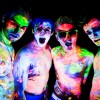
“Take A Picture it’ll last longer’ is an exhibition of music photographs by Belfast based photographer Carrie Davenport. As a huge fan of the local music scene, Carrie has spent much of the last decade working with local musicians both on and offstage and has enjoyed every minute of it!

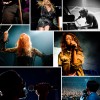
From her first photos taken at friend’s gigs in the front page back when she was an art student she has moved on to shooting for local bands themselves as well as record labels, websites and magazines. More often seen in the pages of publications such as Kerrang!, Hot Press, AU and Molten, this exhibition gives her images a new home on the walls of the group space gallery in the Ulster Hall, a venue chosen for it’s long history as an integral part of the Belfast Music Scene.

Featuring homegrown heroes like And So I Watch You From Afar and other local musicians from different genres with more internationally known names like Slash, the exhibition is a chance to see an overview of the Irish music scene as a whole. Images of local acts showcasing the raw talent we are so lucky to have in this country hang alongside shots of touring bands shot in local venues across Ireland as a whole showing the breadth of talent attracted to play here by the great venues and fans.

In addition to the main exhibition of Carrie’s work there will be a smaller exhibition held in the corridor alongside the group space. This is a unique chance for young and amateur photographers to have their work exhibited in the Ulster Hall as part of Belfast Music Week 2011.

To enter just email your best local music photograph as a jpeg to carsonjan@belfastcity.gov.uk before October 1st 2011. A Judging panel made up of Carrie Davenport, Carolyn Mathers (Belfast City Council), Jonny Tiernan (AU Magazine) and Stuart Bailie (Oh Yeah Music Centre Belfast) will select the 12 best images anonymously from all entries and these will be displayed for the duration of the exhibition. The competition is only open to amateur photographers and a maximum of 3images per entrant is permitted. Photos must feature a local musician in either a live or offstage setting and all winners will be notified and invited to the exhibition launch gig.

Take A Picture It’ll Last Longer has been made possible by the very kind sponsorship of Belfast City Council and will be one of many exciting events taking place during Belfast Music Week 2011. It will run from 27th October until 25th November and is open to the public every day.

[box]An Exhibition of music photography by Carrie Davenport
Thursday 27th October – Friday 25th November 2011
Official launch night gig on Friday 28th October with live music by Colly Stings[/box]

Links:

Belfast Music
Carrie Davenport

Photo Profile : Matt Richardson

Before I start this, it might be worth me saying that I’m not what everybody would call a ‘professional music photographer’. I might be a photographer, but I don’t get paid much to take photos of my favourite bands – I use do it for the love of music. Another thing that might be worth me pointing out is that I’m 17. That can be somewhat restrictive when you’re trying to break into the competitive field of photography. Anyway, here’s my story of how I got into photography.

In 2008, as I’d been so interested in photography previously, I was given my first SLR as a birthday present – a Nikon D40. It was basic and light, but I probably shot over 200 bands in 2 years with it, and gave me the perfect introduction to professional photography. Some of the shots were incredibly grainy (the D40’s maximum ISO is 1600), but I didn’t mind – I was in front of huge crowds, shooting some of my favourite bands.

In 2009, things started to go a bit crazy – I was shooting for a huge amount of publications, including GigJunkie (www.gigjunkie.net), Converse Music, and even the Q Magazine Glastonbury Review. All of this had to be done whilst I was still in full time education trying to pass my exams.

When I applied for photo passes, I was getting more and more of them approved. In August of that year, I was granted a pass to shoot U2 at Wembley Stadium in London. I couldn’t believe it – a crowd of 90,000, and I was closer to the band than 90% of them. That was one of those ‘pinch me’ moments.

Since 2009, I’ve been shooting mainly bands, a lot of them with my trusty D40, until I finally managed to get hold of a new camera in December 2010 – the Nikon D7000. After shooting about ten different festivals with it, and hundreds of bands, I thought it was time to upgrade to something a little more suited to music photography. With a maximum ISO of 25,600, it definitely gives nicer, cleaner results than my previous camera, and I’m smitten.

Last year, I also entered the NME Amateur Photographer competition, and I was voted highly commended by the judging panel (who included Jill Furmanovsky) and NME readers. This led to my photo being published in NME, and also being used on the website.

Now, I’ve decided that I’ll be going to university next September, for a degree in Photography, before I hopefully get a good job working as a photographer. That’s the dream anyway…

Links
www.mattrichardsonphoto.co.uk
www.facebook.com/mattrichardsonphoto www.twitter.com/richardsonmatt
http://500px.com/mattrichardson

28 Marvelous Music Photos

Our recent flickr shout out for music photos brought a wave of not only different photography styles but also different styles of music. Some photographers focused on musical instruments and some live performance. Like any flickr shout out remember to click on an image to comment on it directly on flickr.

To find out more about our flickr shout outs see the flickr themes page.

Oean Colour Scene

Oean Colour Scene

Negative0-35-34(1) by Ginothy

Negative0-35-34(1)

Crowbar by Gobinder Jhitta Photography

Crowbar

The Good Fight by Craig McC…

The Good Fight

NKP_4062.jpg by #NKP_NZ

NKP_4062.jpg

Josh Ritter by dvcox

Josh Ritter

Jose Gonzales by i.embrace

Jose Gonzales

DSC_0602 by Big Mick2009

The Band With No Name by Craig McC…

The Band With No Name

Silhouette by {Flixelpix}

Silhouette

Street Music by KBTimages.co.uk(uk_photo_art)

Street Music

Karima Francis by {Flixelpix} David

Karima Francis

Jonathan Tyler & the Northern Lights by abstractconformity

Jonathan Tyler & the Northern Lights

Old School by Denise_Worden

Old School

Ocean Colour Scene by {Flixelpix} David

Ocean Colour Scene

Vagabond Opera at the Chinese Garden by Thomas Good

Vagabond Opera at the Chinese Garden

Belfast Maritime by David.Bladon

Belfast Maritime

Silhouette by {Flixelpix}

Silhouette

Brandon Pinckard by abstractconformity

Brandon Pinckard

A Gift with Thanks by {Flixelpix} David

A Gift with Thanks

Hold My Beer Watch This Tour by abstractconformity

"Hold My Beer & Watch This" Tour

Tanglewood-008 by SciFiGeek

Tanglewood-008

VOWE #10 by Adams Fehlauer

VOWE #10

Avalon Guitars : Kyle John Suckling by {Flixelpix} David

Avalon Guitars : Kyle John Suckling

Fruit Bats_3 by abstractconformity

Fruit Bats_3

Bullet For My Valentine by Gobinder Jhitta Photography

Bullet For My Valentine

Deep Jazz by KBTimages.co.uk(uk_photo_art)

Deep Jazz

Before The Fun Starts by eboe3010

Before The Fun Starts

To find out more about our flickr shout outs see the flickr themes page.

First 3 Songs : A Complete Guide to Music Photography II

“The 3 first songs and no flash”. That’s the standard speech that you will get when you pick up your photo pass at the venue.

Low light, fast moving subjects and bright spotlights make concert photography is one of the most difficult, yet rewarding niches in photography.

Pendulum

There are 3 factors that need consideration when it comes to gear and low light photography, the camera, the lenses and the settings used to photograph.

It is important to have a camera that is able to be used at high ISO without producing too much noise. It is not very common for me to use an ISO value that is lower than ISO1000, more often than not I will find that I shoot most of the photographs at ISO1600 or more.

Aura Dione

When it comes to the choice of lenses I have a set of four lenses that I use for concert photography. Which focal length doesn’t really matter as it heavily depends on the style of the photographer, but they need to be fast lenses.

F2.8 is a minimum here, I never use a smaller aperture than F2.8. I experimented once or twice with an F4 aperture and I got away with it. But only because the light was exceptionally good at that show. Since there is no way to predict how the light is going to be I only carry F2.8 or even my trusty 50mm F1.8 (best in price/quality I’ve used) in my camera bag at all times.

Buck Cherry

I think the settings that concert photographers use are very personal, there’s no right or wrong here. It depends on your preferences and obviously on your photographic style. I always have my camera set to manual mode, leave the aperture on F2.8 and adjust my shutter speed and ISO to match the lighting situation.

Why not use aperture priority mode? Well because I want to have fast control over my shutter speed at all times. Another important setting is the metering mode. I have mine set to “spot metering” during concerts as it is the only way to get a approximate reading of the lighting situation.

I don’t use the in-camera exposure reading very often though, it can be off due to the harsh contrast in lighting. I usually have a quick look after the first two pictures to see if my settings result in correctly exposed pictures and adjust if needed.

Slash

I use a Canon 5D with 4 lenses that vary in focal length from 15mm (fisheye) to 200mm, all in F2.8 or F1.8. I do carry a flash Canon 580 EXII for quick portraits before or after the gig. To carry my gear I use a Tamrac Expedition 6 back pack.

A few tips :

  • Know you camera. You need to be able to change settings in the blink of an eye.
  • Use the fastest lenses you own, and leave them at the biggest aperture possible.
  • Don’t be afraid to change your ISO value to adapt to the lighting situation.
  • Move as much as you can to change the angles at which the pictures are taken.
  • Don’t be afraid to be different. If you think differently your pictures might stand out over the average photographers pictures.
  • Always use ear plugs. It might not look cool but Tinnitus is not fun to live with.
  • Check your settings and memory cards before the show begins. Trust me, …..

[box type="shadow"] About Tom Di Maggio

Tom is a freelance Concert and Band photographer based in Luxembourg. I photograph concerts for Road Runner Records, a few radio stations and some webzines. I do also love photographing people which I do with InFocus photography (www.in-focus.lu). I also enjoy publishing articles here and there about concert and band photography on the web.

You can find out more about Tom over on his Blog

and website.
[/box]

Photo Profile : Ramsey Cardy

It is with great pleasure we welcome professional music photography Ramsey Cardy to our photo profile series. Ramsey is the also the author of the great guide to music photography. In school, I was always the kid in the class that couldn’t draw and was bottom of the class in Art so it really was by luck that I ended up having a career in Arts.

I picked up a Canon 400d and took it to my friends gig in The Rotterdam Bar in Belfast. Looking back, I hadn’t a clue what I was doing with it and shot fully in auto mode. I look back at the photos now and laugh, they really are awful!

I didn’t give up though and kept shooting gigs in small bars, eventually getting a bit of a break and shooting live gigs for Queens University Student Magazine. Continuing to photograph music, I worked my way through the ranks and many different venues and eventually started talking to publications about shooting for them. This has led me to shoot some incredible artists such as The Police, Bruce Springsteen and Beyonce.

Every time I walk into a venue to photograph an artist, I always aim to get at least one image that I would be happy to put in my portfolio. I love to work against challenging lights and fast moving musicians, the feeling of getting a great shot in tough conditions is amazing.

Starting out, my dream was to snap shots of my favourite band, Metallica, and in August of 2009, my dream came true in Marlay Park, Dublin. I aspire to become a touring photographer, attached to a band and documenting it, so fingers crossed that I get there soon! Apart from that, though, I live for the excitement of being a photographer.

It’s important to understand that my inspiration isn’t just drawn from other photographers, but a lot of different factors, but I if I was to pick one source it would be the early works of legendary music photographer, Ross Halfin. His projects with Metallica in the 80′s are masterpieces and are something that I still look back at.

The likes of Danny North, David Bergman and Paul Harries have all been massively influential on me also, Harries’ band portraits are a cut above the rest and are truly stunning to behold as works of photography.

I know how lucky I am to be paid to do something that I truly love and enjoy and am grateful every day for it.

Links:

Ramsey Cardy

Guide to Music Photography

In this very special guest post freelance music photographer Ramsey Cardy of Shoot to Thrill guides us through the art of shooting at a live concert.

I get quite a lot of emails from people wanting to get into music photography, so i’ve decided to create a guide. There are many ways to set up your camera to get results at a concert, these are the ones that work for me. Hopefully this will help everyone and let me know if there are any other topics you would like covered.

Equipment

Camera
This one really depends on your budget, but the best thing that I would recommend is to go to your local camera store and see what feels best in your hands, it’s the next section that really matters. If you’re planning on using your camera for mainly concerts, I would advise buying the body on its own and investing in your own lens as the kit lens is useless in most venues.

Lens
So, now you have your camera you’ll want to invest in some glass! For concerts, you generally need to shoot as wide open as your lens goes so getting a lens that shoots at a minimum of 2.8 is almost essential.

Check out the Tamron/Sigma range, both manufactures offer midrange lenses (17/18-50mm) so again, check out your camera store for which you prefer. For slightly extra reach, there is also the 24-70 lens. This is generally for full frame users, but I preferred it to the 17-50mm on a cropped camera as it meant you could really get in close to the performer at the 70mm end of the lens. If you’re looking to spend more money, both Canon and Nikon have incredible midrange lenses that really are worth the extra money.

At this point, you probably won’t need a 70-200mm too often, but you’ll need it if you’re ever shooting in an arena/festival.
Here’s the lens that will get you out of sticky situations pretty regularly, the nifty fifty! It’s cheap and cheerful, I think it retails at around £80 at the moment. The 50mm 1.8 shoots at a pretty wide aperture so it picks up plenty of light. (If you’re looking to spend more money, the 1.4 is amazing)

Flash
Whilst flash is generally not allowed at gigs, when you’re starting out I would recommend having it as an option, you can decide once you’re at the venue if you’re going to need it or not. Most small venues don’t really mind if you shoot with flash, so clear it with the band first and it will generally be ok. Try and avoid shooting the full performance using flash though, it’s fine for a few songs, but you have to remember that the audience has paid to see the band and it distracts them.

When and where to use flash? If flash is allowed at the venue, it’s up to you when you decide to use it. After a while, you’ll learn which venues you have to use flash and which you won’t. The best idea is to take a few test shots with as high a iso as your camera can handle without becoming a noisy mess and then make your decision.

Note: I nearly always keep my speed light on the camera (turned off), if the artist comes into the crowd or runs along the barrier, you’re going to need it and security generally won’t mind. (If the photo pit is really packed though, put it into your pocket or something, it might hit off other cameras if things get tight in there.

Does flash annoy the artist? To some extent, yes it does, but I’ve spoken with artists, the lights that are in front of them are much brighter than a flash and are constantly on, so most don’t even notice the occasional flash.

How to use flash without killing the ambient light? This one is something that only experience will help you with, but my general rule is to set your camera to expose for the lights and get enough light in (so probably something like a shutter of 1/80) and set your flash at quite a low power so that it will expose for the performer correctly.

Note: I would also recommend investing in re-usable batteries. They may cost more than standard batteries but it’ll easily work out less in the long term.

Settings

So, now you have your equipment, what to do with it? About 85% of concerts are pretty dark, so you need to set up your equipment at quite a high iso. This depends on your equipment but I would generally start at iso 800 and then work my way from there. As previously mentioned, you need to shoot at a wide aperture, so set your lens to shoot as wide as it can go (usually 2.8) and you need to freeze your performer, so I wouldn’t start any lower than 1/125.

If you’re shooting a performer that is going to be jumping around a lot, you’ll need a much faster shutter to freeze them, generally 1/250 and above, to achieve this you may need to up your iso to get enough light in.

Where to start shooting?
So now you have your equipment and know how to set it up, you need somewhere to take photos. At the beginning, unfortunately, you can’t just walk into an arena and demand to take photos of Metallica! The best place to find out about local gigs is get yourself onto local forums and MySpace and message local bands playing in your area and ask them if they could set you up with a photo pass in return for a few web size photos for their MySpace account. Most won’t have a problem with that and will be fine. Go to the door of the venue and you’ll be on the guestlist.

Red lights
Most jobs have their bad points, this is mine. I get asked all the time how to deal with red lights, unfortunately there is very little that you can do about it sometimes. The easy way out is to switch the image to black and white, red lighting usually comes out quite nice in b/w.

The hard way? I generally deal with them by upping my iso further than I really need to expose for the lights correctly, obtaining a faster shutter and this will usually minimize the burning effect that can often occur under harsh red lighting. Then in post, turn down the saturation on the image and then adjust the white balance accordingly so it still looks natural.

Focusing
This is another question that im asked quite often, personally I use one shot as servo simply doesn’t work a lot of the time at gigs. One shot will grab the focus of the artist, and then lock it until you press the shutter. Why not to use servo? Servo will be continually looking for any adjustments in your focus, so if an artist does something like point at your lens, the camera will skip to focus for the hand generally and you’ll miss your shot. Also, if a performer is standing still and then jumps, it will re-adjust the focus and you’ll miss the jump where as it would have been better to keep the same focus point.

When to use servo?
If you’re shooting a metal gig where the performer is headbanging it will be a total nightmare to keep focus.
The exception to this rule is The Prodigy, always servo for them!

How to focus in dives? Focusing in really dark venues is always tough, sometimes you just have to look for a little bit of contrast on the singers face and then grab focus. If the artist is standing at the mic though, a trick to use sometimes is to focus on the mic, and then manually focus from there to nail the focus.

How to consistently nail exposure?
Another one that will only come with experience, but the key is to watch the lights. Just as music has key changes, choruses etc, so do the lights so make sure you watch out for them, every song has a light pattern.

For starting out at a gig though, make a rough estimation of what your settings will be (probably around iso 800 – 2.8 – 1/125) and then when the band is on stage take a few shots and see how they look and adjust accordingly. Don’t worry about missing the first few frames when they come on stage, nothing ever happens, it’s much better to have good shots from the rest of the songs. (You’ll have to adjust at the start of every song, as I said, each song has its own lighting pattern.)

Dealing with strobe lighting
You’ll come across these at some point, another thing to make it tough for you! There’s a few ways of killing the strobe, some like to use flash (in this instance it’s not even noticeable to the crowd or the band) but I personally don’t like the results it gives. I like to shoot a burst of three frames. One of the frames will come out hugely under-exposed, one hugely over-exposed and one will be perfectly exposed with the performer at the front with loads of back lighting. (This is how the image of Maxim of The Prodigy in my portfolio was created.)

Building a Portfolio

So, if you’ve read this far you’re either very bored or pretty interested in how to make some money out of this! The key to that is to have a kick ass portfolio. When I look at other peoples portfolio’s, I always look out for a variety between wide shots, close ups, portrait, landscape, black and white, loads of colour to show your not a one trick ….photographer?

Submitting to Publications

I always advise people not to submit to publications too early, once you’ve submitted your portfolio to a picture editor, they’ll take a look and if it isn’t up to standard you probably won’t get a second chance with that editor, they simply don’t have the time. (An example is Rolling Stone Deputy Picture Editor, Deborah Dragon was interviewed and said she received 150 emails a day from photographers.)

If you’re happy with your portfolio though, if you look inside the magazine your hoping to shoot for (usually inside the front/back cover), you’ll see a list of the staff, pick out the picture editor (or deputy) and email them with your portfolio and a little bit about yourself, if you’re lucky you’ll get a reply.

Research

When I know im going to be shooting a band, I always do research on them before I leave for the venue. YouTube and Wikipedia are my two main resources. Look up band members so you know who you should be focusing your attention on (for instance, you wouldn’t take photos of Beyonce and concentrate on the backing dancers or the band.) and also try and find a setlist of the first three songs that you’ll most likely be shooting and then search for it on youtube.

How to behave in the pit

There’s nothing worse than lining up a shot and another photographer who isn’t paying attention bumps into you and you miss your shot. Always look out for other photographers when you’re in the pit, chances are you’ll be shooting alongside the same people nearly every gig. There are times when it’s tight in there and you’ll bump into people, a simple apology will go a long way.

Be nice to the security! At some point you’ll get kicked over the head/a beer bottle to the head/a crowdsurfer to the head (Yes, all of these have happened me before!) so you might need their help so be on the right side of them!

How to get a photo pass

(This one only really applies to large touring acts rather than local gigs)
You’ll need to contact the bands pr/record label/management and request a photo pass for x gig and that you’ll be shooting for x publication.

How to Find Them

Some bands are really helpful and have a contact page on their website/myspace and you can get the contact there. Most don’t though, you can try and Google things like ‘*name of band* contact/press’ and hope you get a result. Otherwise, find what label their on and phone them.

What is a photo pass?
When your name is at the door of the venue, you’ll be given a sticker with the band name on it that will get you access to the photo pit.

(Top Row (L to R): U2 – Simply Red – Chris Cornell – The Eagles. Bottom Row: Metallica – Jeff Beck – Bruce Springsteen)

What to do when I get to the venue?
Assuming your name is at the door, tell them you’re a photographer and you should be on guestlist, tell them your name and they’ll give you a photo pass.

Contracts

Once you’re shooting larger acts, they’ll ask you to sign a contract stating where the images are going to be used and they won’t be used anywhere else (These are fine, it’s just protecting their artist). Unfortunately some bands are too cheap to pay for their own photography and want photographers to sign over copyright of their own images so they can use them for whatever they want, for the sake of every photographer trying to make a living from this, DON’T SIGN THESE! Below is an example of a rights grab (I’ve only pasted the important bits)..

“..that following our request you shall provide us with 1 (one) copy of each of the Photographs in such format as we shall request.”
“You grant to us and/or the Artist the exclusive right to exploit the Photographs throughout the world in perpetuity in any manner without any further payment to you.”
“ You hereby transfer and assign to us with full title guarantee the entire copyright and all extensions and renewals throughout the world (including by way of present assignment of future rights) and all rights of a similar nature in the Photographs.”
“4. I hereby waive all rights of droit moral or “moral right of authors” or any similar rights or principles of law which I may now have or later have in the Photos. I warrant and represent that I have the right to execute this Certificate and that the Photos are and shall be new and original with me and shall be capable of copyright protection throughout the universe, that they do not and shall not violate or infringe upon any common law or statutory right of any party, or constitute unfair competition and are not now and shall not be the subject of any litigation. I shall indemnify and hold you, and your employees, officers, agents, assignees and licensees, harmless from and against any losses, costs, liabilities, claims, damages or expenses arising out of any claim by a third party which is inconsistent with any warranty or representation made by me in this Certificate.”

Promoting your work

Without a doubt the best way is to have your own website, this way you can control how the images are displayed and who can access them. Other ways are to get onto Flickr, MySpace or even create a Facebook group. The one that is probably going to work best though (alongside your own website) is to get onto local forums and after a gig post one photo (don’t post them all or they won’t bother to go to your website) and a link to the rest of your shots. This will get your name around and hopefully the right people will look at it.

About the Author

Ramsey Cardy is a professional music photographer based in Northern Ireland In his time as a music photographer, he has photographed world touring artists such as The Police, Celine Dion, Metallica, Bruce Springsteen and many more. He has been published in many publications including The Sun, The Mirror, The Times, Irish News, Daily Mail, The Guardian and many more. Check out Ramsey’s website at http://www.shoottothrill.co.uk/ You can also follow Shoot to Thrill on Twitter Here.